
ActivitiesIce climbing and dry tooling
Crystal cathedrals
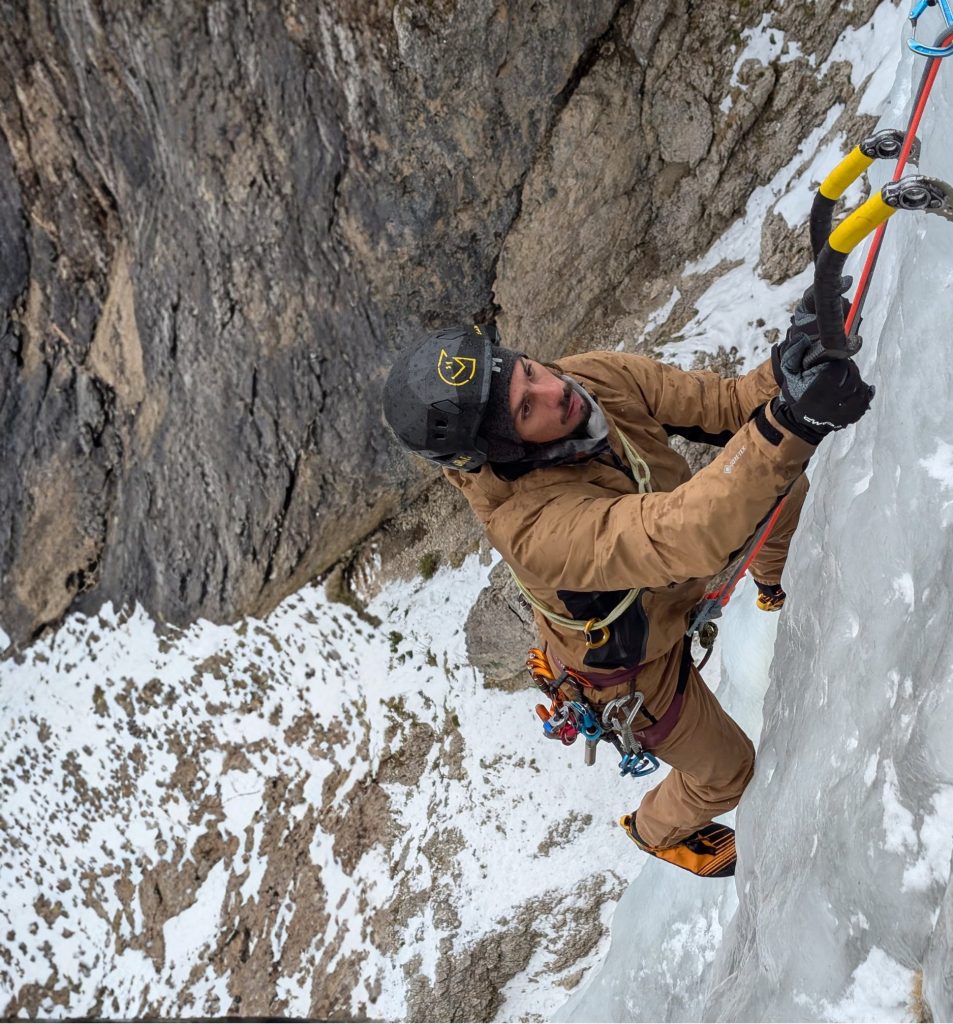
Multi-pitch ice climbing course
A multi-pitch frozen waterfall is a route that demands much more than climbing technique alone. You have to assess conditions, organise the rope team’s progress, build belays and manage the descent, often in a complex winter setting.
CRYSTAL CATHEDRALS is a two-day course for those who already lead on frozen waterfalls and want to take on longer routes, learning to manage multi-pitch climbing.
From the approach over snow-covered ground to belays on ice, from leading the rope team to a series of abseils: two days in the mountains to bring together the skills you already have and apply them to more demanding routes, under the supervision of the Mountain Guide.
Who it’s for
For anyone with experience of leading single-pitch frozen waterfalls who wants to take on multi-pitch routes in an alpine setting.
For climbers who know rope techniques on rock and want to transfer those skills to ice, dealing with winter approaches and more involved belays and descents.
What you’ll build
During the course you’ll learn to:
- Plan a multi-pitch ice route, assessing snow and weather conditions, the approach and the options for getting back down.
- Organise the rope team’s progress over several pitches, managing protection, belays and changeovers.
- Build and manage belays on ice screws and Abalakov anchors.
- Manage the ropes at belays, including in low temperatures.
- Organise and carry out a series of abseils.
- Weigh up decisions about progress and safety during a winter climb.
Prerequisites
You need solid experience of leading single-pitch frozen waterfalls, gained on the A matter of balance course or through equivalent activities.
You also need to have done a Multi-pitch or Trad course on rock, or have a good command of rope techniques on multi-pitch routes.
Good fitness and experience of moving in the mountains in winter are required.
How it works
The course runs over two days in the mountains, dedicated to climbing multi-pitch frozen waterfalls and managing rope techniques along the route.
- Day one
Day one starts with preparing the gear and assessing the snow and weather conditions, the approach and the chosen route.
You reach the foot of the icefall on foot or, when necessary, on snowshoes or skis, crossing snow-covered ground.
While climbing a multi-pitch icefall, you work on managing protection, building belays and organising the rope team, with particular attention to rope techniques and handling the ropes in the cold.
The descent gives you the chance to practise setting up abseils, including from Abalakov anchors.
Overnight stay in accommodation on a half-board basis.
- Day two
Day two is dedicated to a classic multi-pitch icefall, longer and more demanding than on day one.
Participants organise the rope team and take part in decisions about the approach, reading the route, progress and belay management.
Particular attention is paid to keeping the rope work flowing, rope-team efficiency and organising the series of abseils for the descent.
The Mountain Guide accompanies and supervises every stage of the climb, matching the responsibilities given to participants to their abilities and to conditions on the mountain.
The day ends with a debrief on the decisions made and the skills to consolidate.
Practical information
Personal equipment
Mountaineering boots compatible with step-in crampons, technical ice-climbing crampons with step-in bindings, two technical ice axes, helmet and harness.
Belay/abseil device, screwgate karabiners, prusik cord, belay lanyard and personal kit for rope techniques. For this advanced course you’ll also need an Abalakov hook and 3–4 ice screws of your own.
Avalanche transceiver, shovel and probe for approaches over snow-covered ground, as advised by the Mountain Guide.
Layered technical winter clothing, waterproof and windproof shell, two pairs of gloves, head torch, flask and 35–40 litre rucksack.
The final kit list and any hire options will be sent to you before the course.
The price includes
- Instruction and guiding by an IFMGA/UIAGM Mountain Guide on both days.
- The Mountain Guide’s professional liability insurance.
- Rescue insurance for participants, subject to the policy terms.
- Use of the ropes and shared technical equipment needed for the exercises, provided by the Mountain Guide.
The price does not include
- Personal equipment and any hire costs.
- Participants’ travel, half-board accommodation, meals and lifts.
- Travel, accommodation, meals and lift costs for the Mountain Guide and any assistants, shared among the participants.
Organisation and logistics
The course runs over two consecutive days, with an overnight stay in accommodation on a half-board basis.
Activities take place in alpine valleys with multi-pitch frozen waterfalls. Possible destinations include Cogne (Valnontey and Valeille), Ceresole Reale, Val di Rabbi, Sappada and Switzerland.
The choice of routes will depend on ice and snowpack conditions, safe approaches and participants’ level.
The meeting place and time, together with details of transfers and accommodation, will be sent to you before the activity.
Deposit, cancellations, weather and insurance: read Terms and information.
More ice climbing and dry tooling activities

First swings
Ice climbing lab, introduction
Two days to work on movement and the core techniques of ice climbing, with practice on real terrain and a focus on managing safety.
Scheduled16–17 January 2027
Beginner-friendly
per person€170
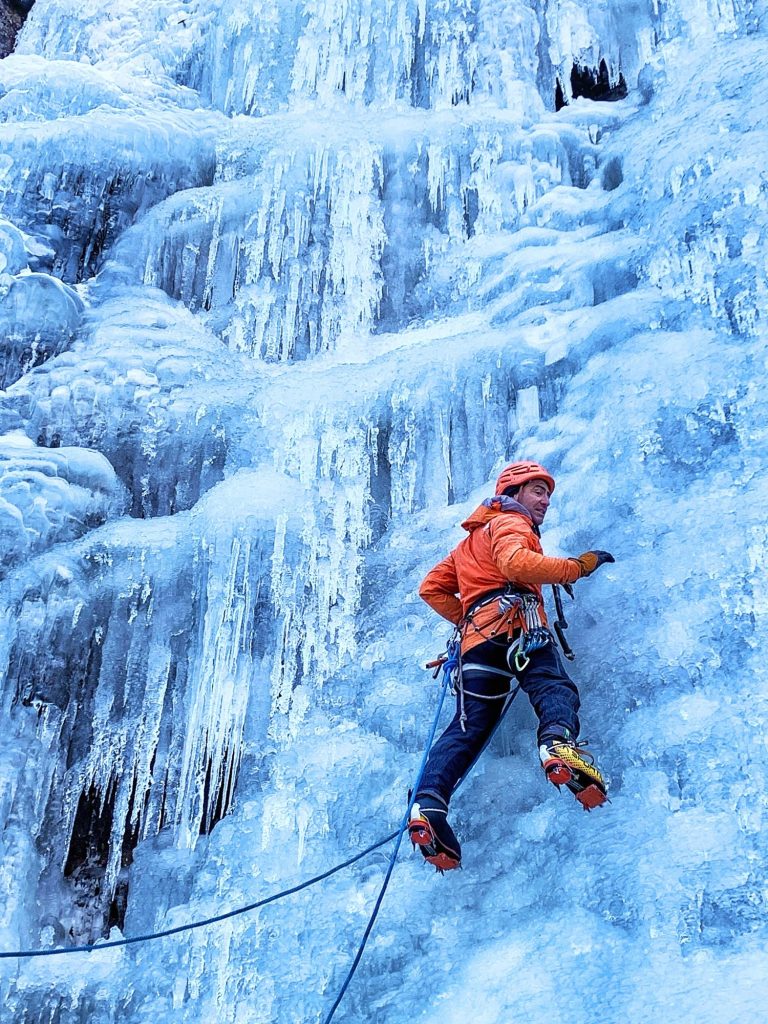
A matter of balance
Ice climbing course, basics
Two days of ice climbing on frozen waterfalls, learning how to place protection and manage the rope team. Designed for those who have completed the introductory LAB or already have equivalent skills.
Scheduled30–31 January 2027
Experience required
per person€190
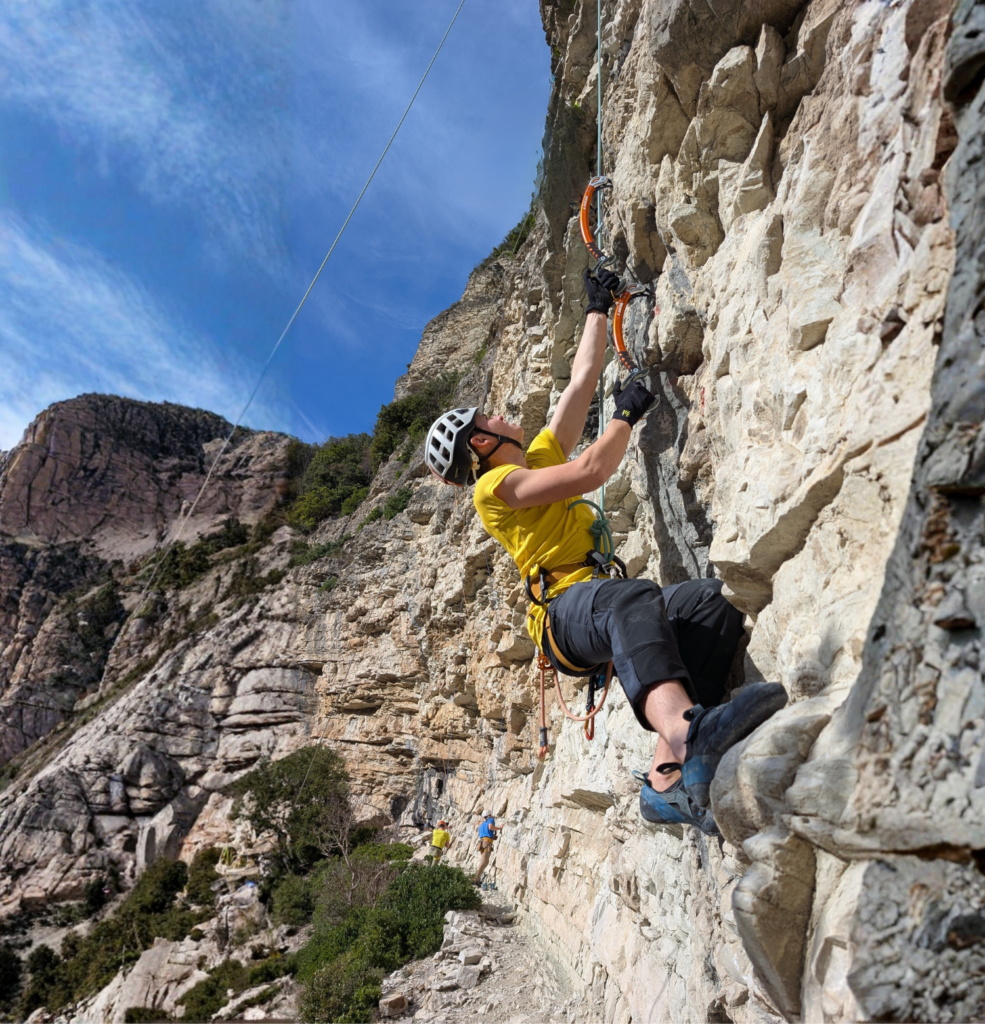
Steel on rock
Dry tooling lab
A day to get started with dry tooling technique: a lab with its own identity, also useful for building skills to take onto mixed terrain.
Beginner-friendly
per person€90