The PathMountaineering
Mountaineering
The terrain changes. So does the way you move.
Mountaineering rarely asks just one thing of you.
You walk, you climb, you move together, you place protection, you change your set-up. Rock, snow and ice can alternate or mix, and techniques learnt on different terrain have to start working together.
Here it isn’t just about having the tools. What counts is recognising the terrain, choosing the most suitable way to move and being able to switch from one mode to another without losing efficiency, focus or control of the rope team.
Mountaineering isn’t always the same thing. Neither is learning how to move.
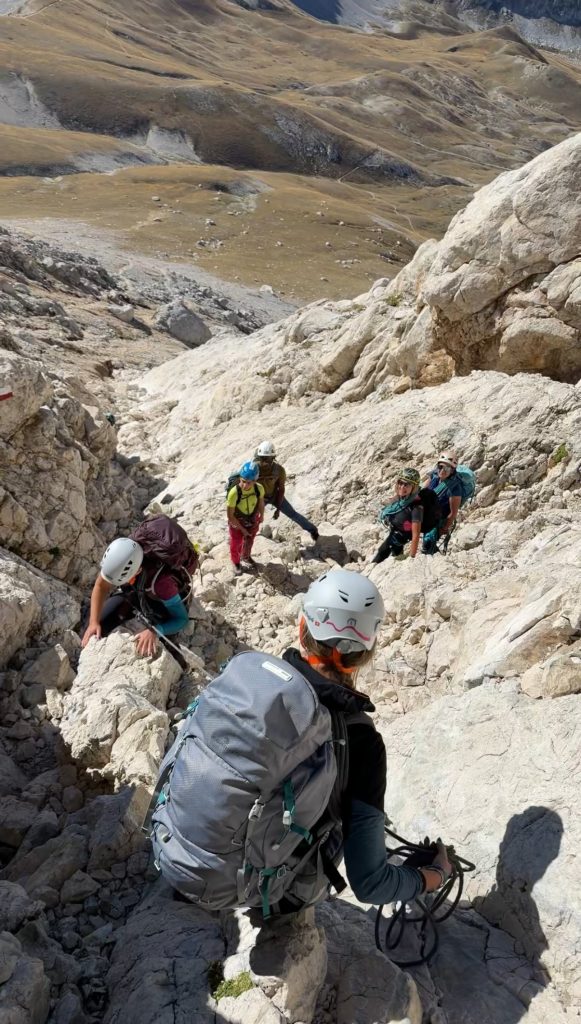
Moving in the mountains means learning to change as the terrain changes: shortening or lengthening the rope, placing protection when needed, switching from moving together to climbing a pitch, choosing a line, managing your partner and your timing. In winter, specific conditions and techniques come into play.
Choose the option that matches the skills you have and the ones you want to develop.
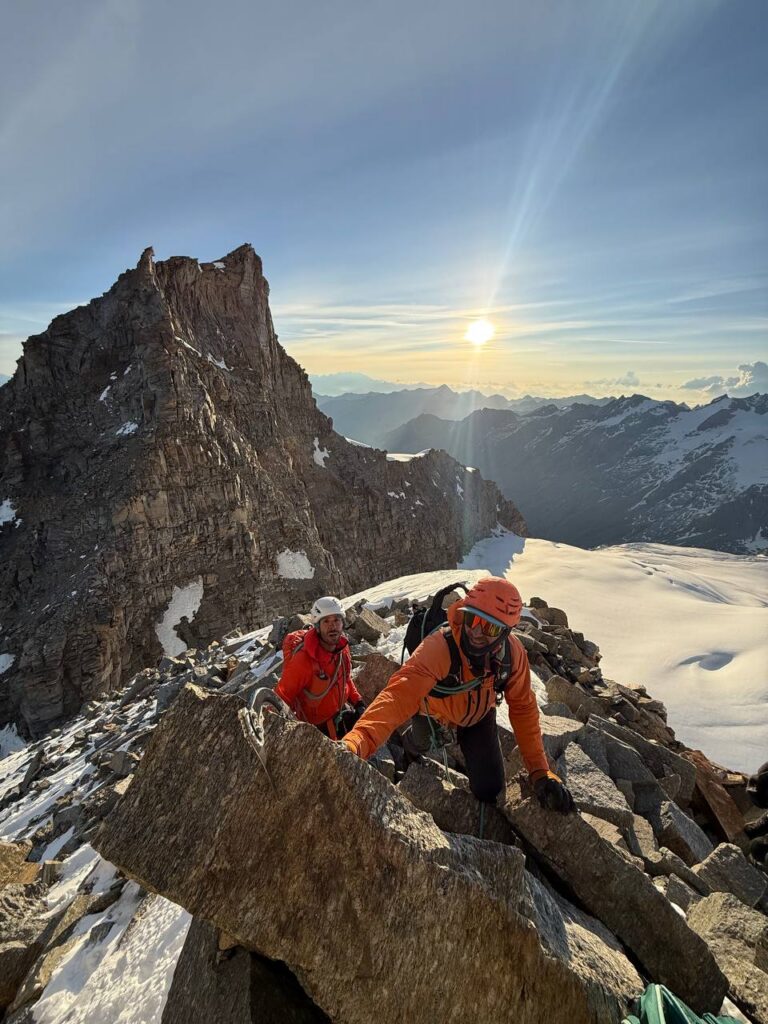
For those who want to work on managing the rope team on the move: spacing, coils, natural anchors and switching between different ways of moving. Short-roping isn’t just a way of tying in, but a skill to practise on real terrain.
One option to start from
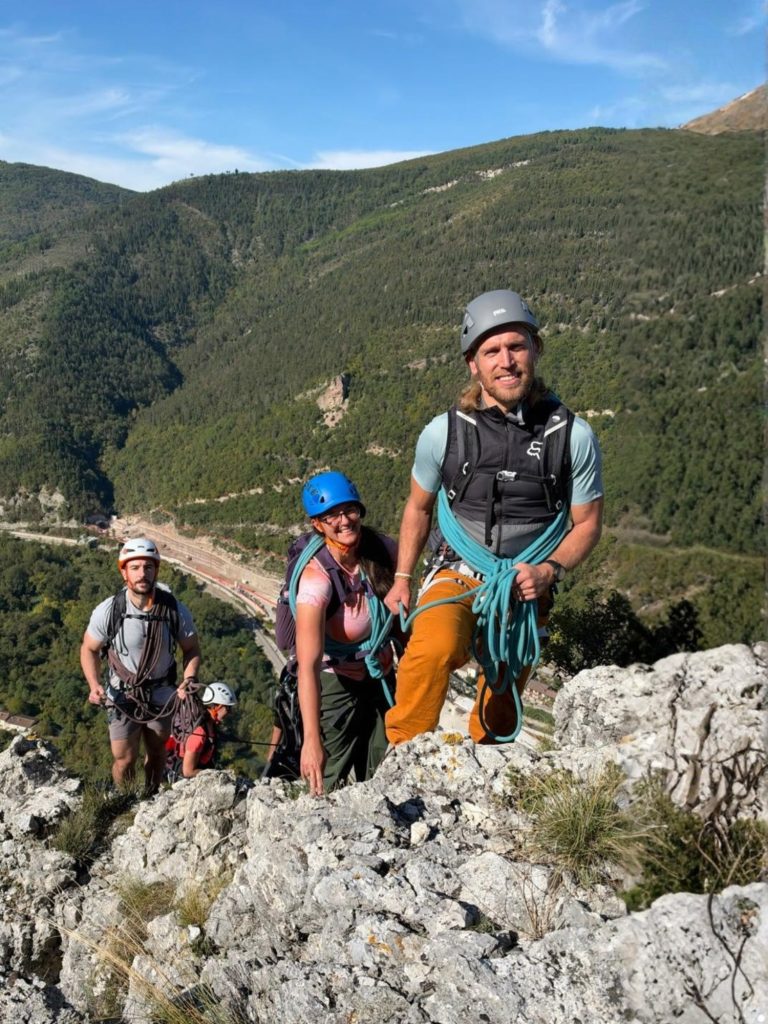
Two different ways to start building mountaineering skills: learning to move and manage the rope team on real terrain, or tackling the techniques specific to winter conditions. The courses have different content and entry requirements.
3 options to start from
Follow the skyline
Basic mountaineering course
Two days to learn the fundamentals of moving on rock, handling the rope and using protection and belaying techniques, with practical exercises and an easy alpine route.
Scheduled17–18 April 2027
Beginner-friendly
per person€180
The rules of winter
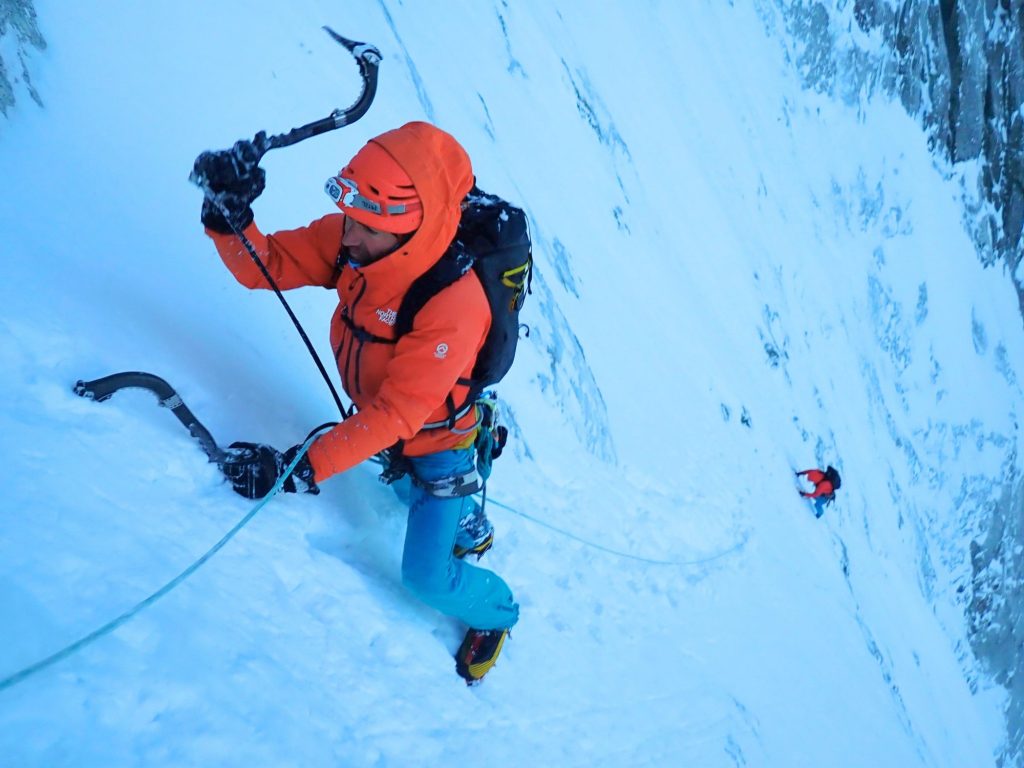
Winter mountaineering course
Movement techniques and safety management in the mountains in winter, on snow, ice, couloirs and mixed terrain, choosing the right technique for the conditions.
Scheduled23–24 January 2027
Beginner-friendly
per person€180
Changing terrain
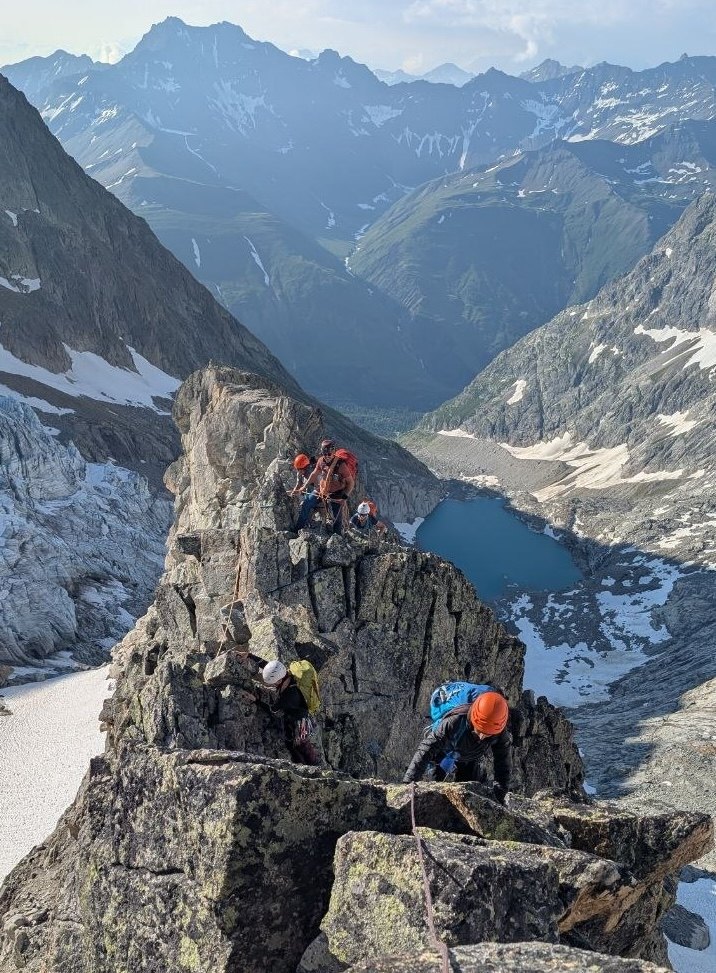
Rock and glacier mountaineering course
Three days on Mont Blanc learning to move across rock, glacier and ridges, picking up the basic techniques of moving as a rope team at high altitude.
Scheduled18–20 June 2027
Beginner-friendly
per person€440
For those who already have rock-climbing experience and want to work on movement, rope-team management and technical choices on more complex mountaineering routes.
One option to start from
First you prepare the moves. Then you take them out onto the terrain.
In the mountains, cold, wind and fatigue can make even simple tasks harder. That’s why, when needed, we can set aside some time to prepare knots, systems and rope handling: so we reach the terrain with moves we already know and can focus on the decisions the mountains demand.
Short-roping is an art: it is neither a sport nor a mountaineering activity.
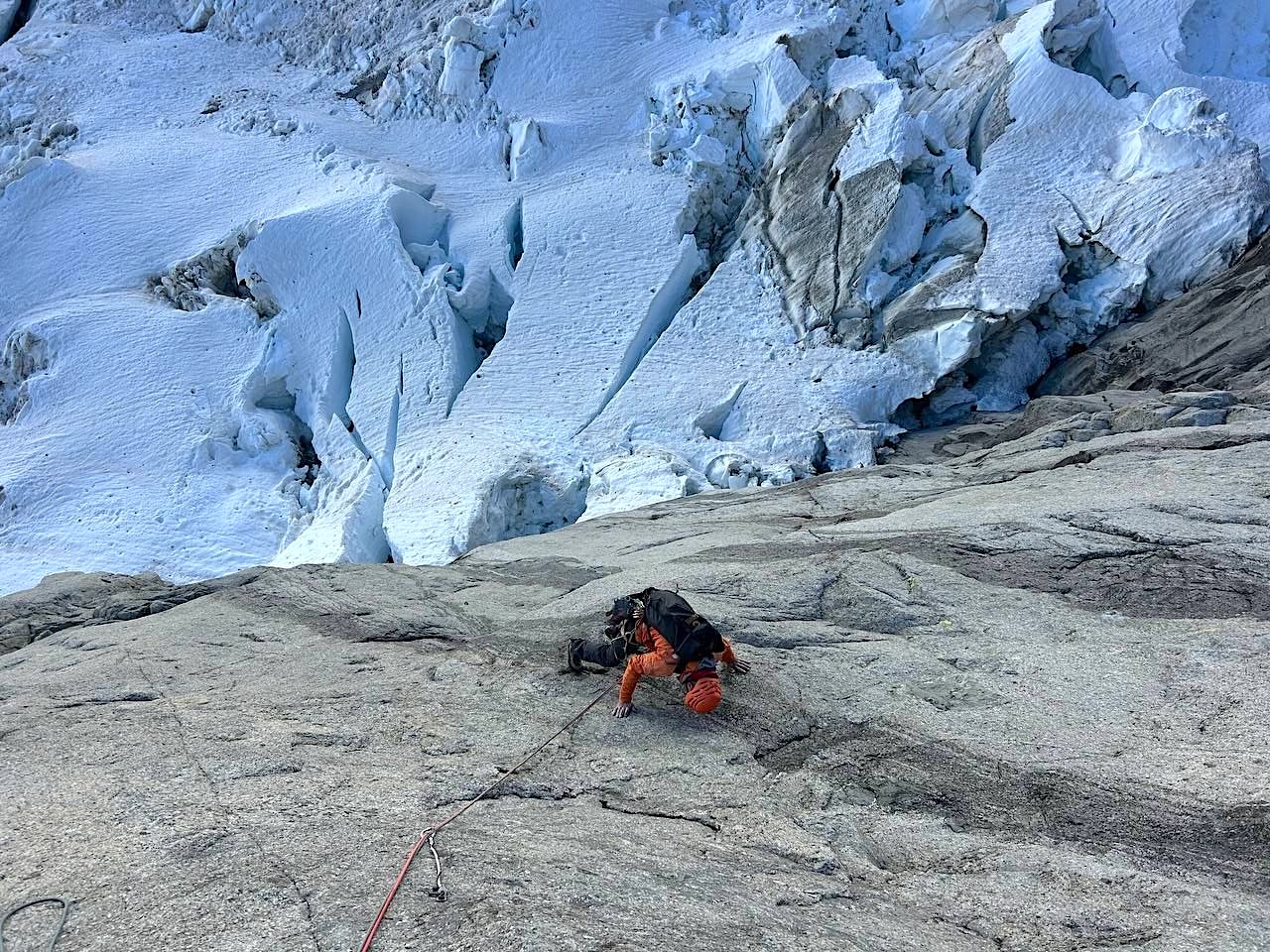
Every climb asks you to make choices.
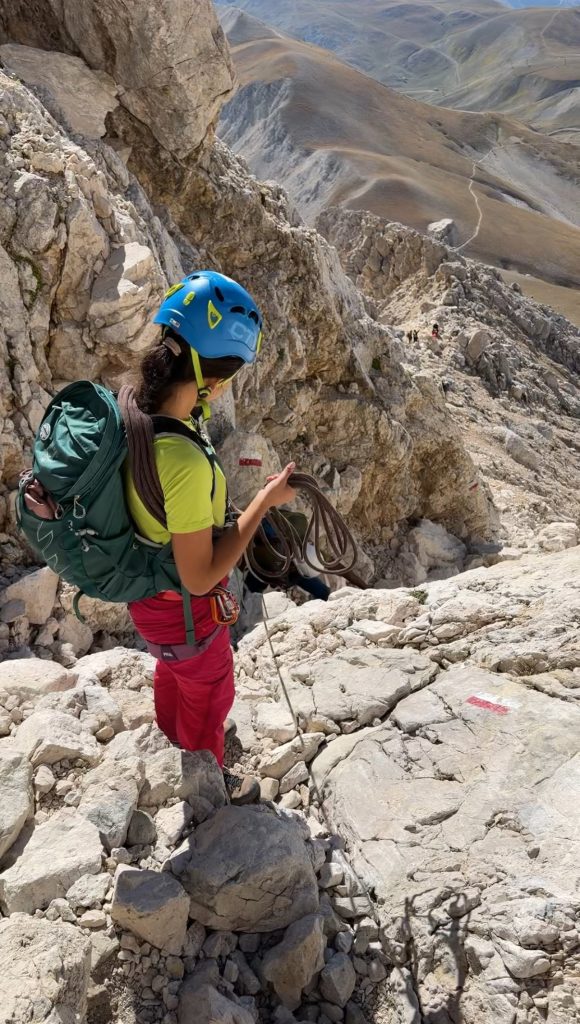
Some days are mainly about learning, and on others the plan is to live a climb: a ridge, a traverse, a winter route or a big ascent that calls for bringing different skills together.
Experiences are not a reward at the end of a learning path. You can take part even if you haven’t done an inAlpe course, as long as you have the skills required for the climb.
If you have a particular climb or project in mind, tell us about it: we can think through the most suitable option together.
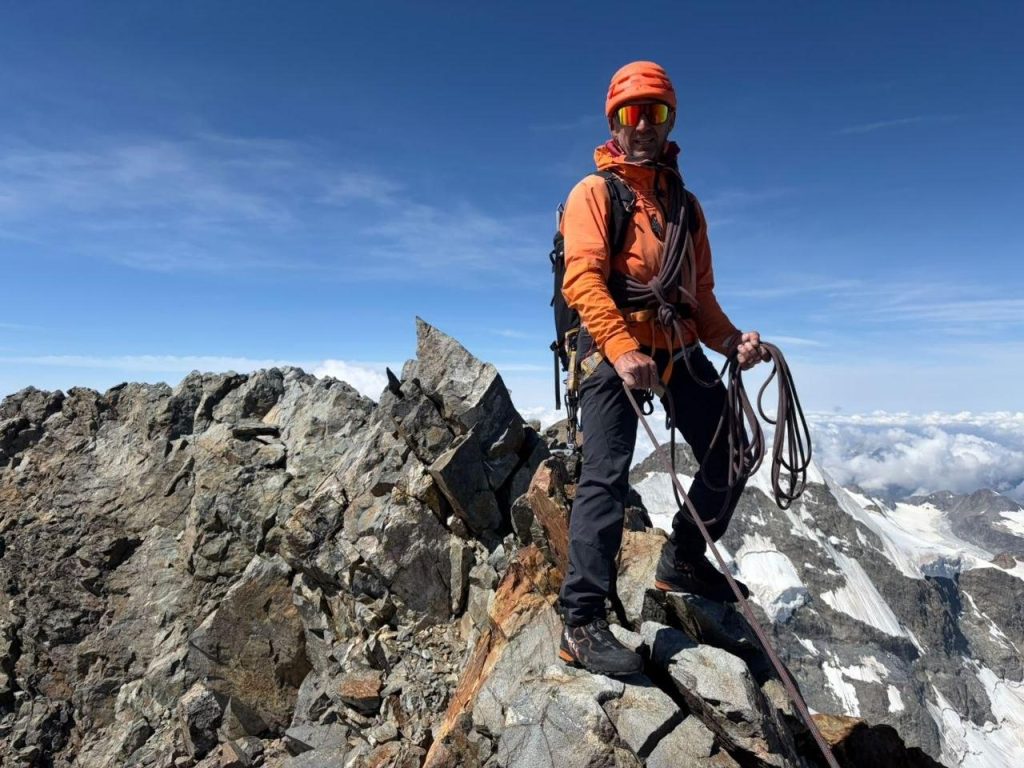
There’s no single way to move in the mountains.
A ridge, a couloir, a face or a winter route each call for a different way of moving. And often, on the same climb, you need to be able to switch from one to another.
What skills do you already have? Which ones would you like to develop? Tell us: together we can find an option that lets you work on exactly what you need.
The other terrains
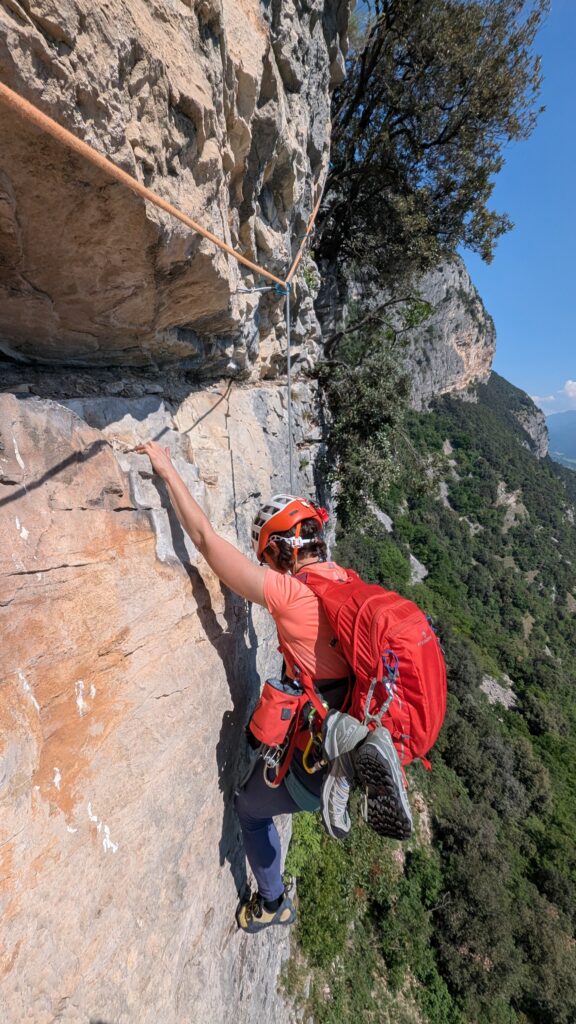 RockThe mistake is thinking you learn mountaineering by doing mountaineering.
 Ski touringJust because you know how to ski down doesn’t mean you know where to ski down.
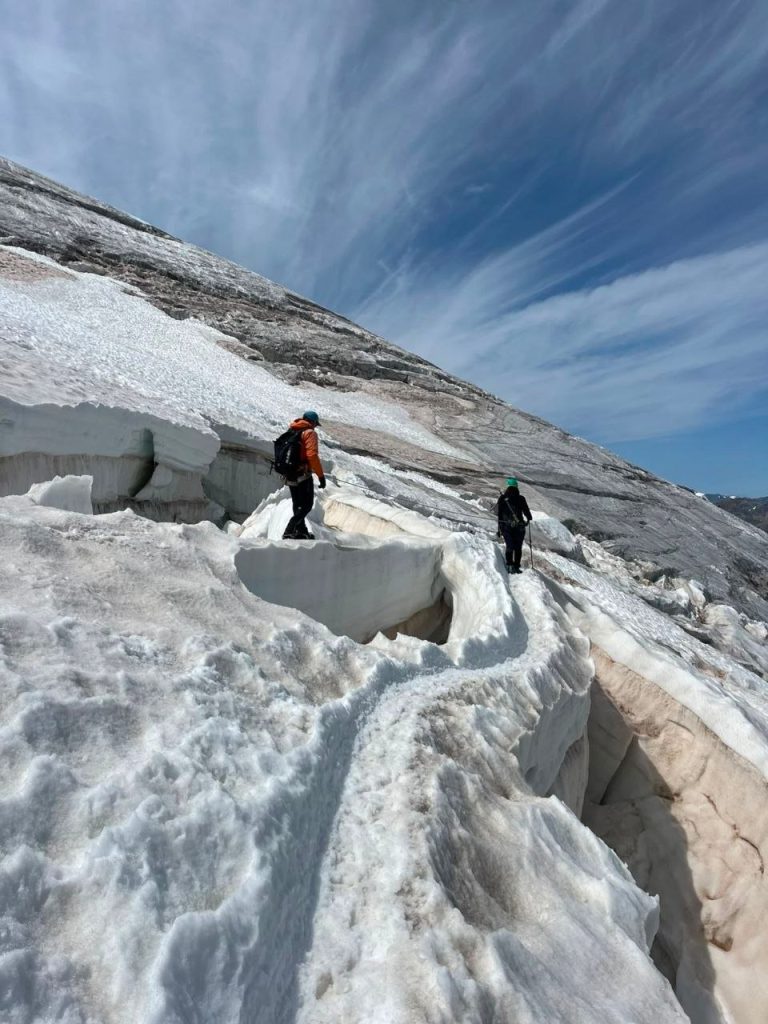 High mountainsOn a glacier, what you can’t see matters as much as what you can.
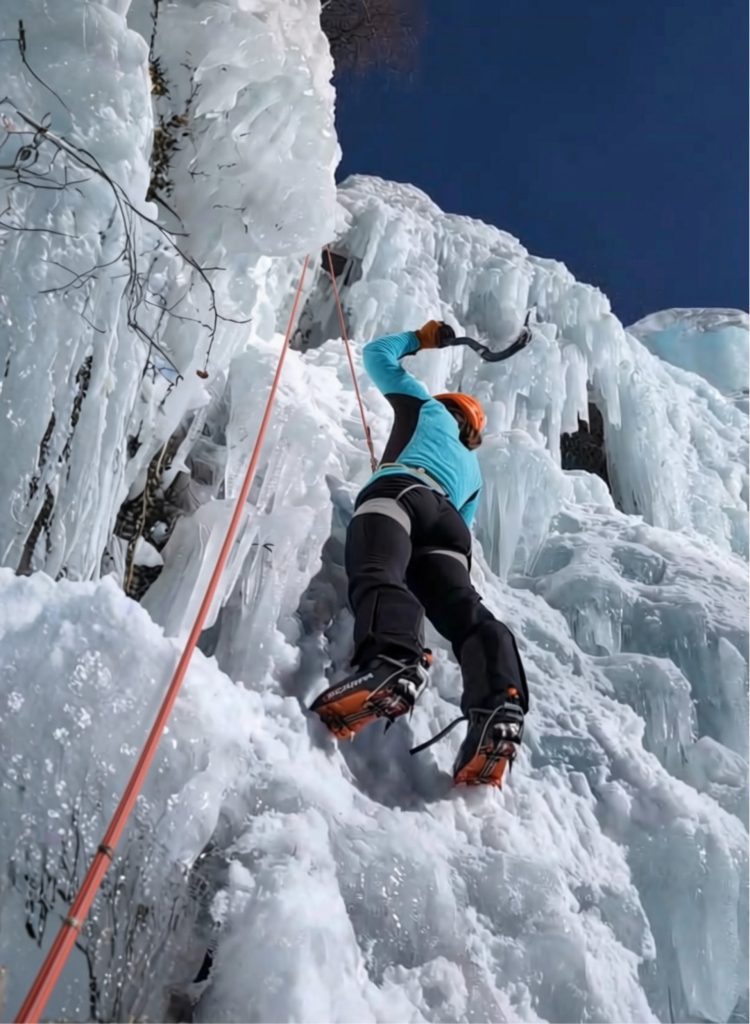 Ice climbing and dry toolingIce is fleeting. The right moment to climb it, even more so.