Coming back up
Advanced crevasse rescue lab
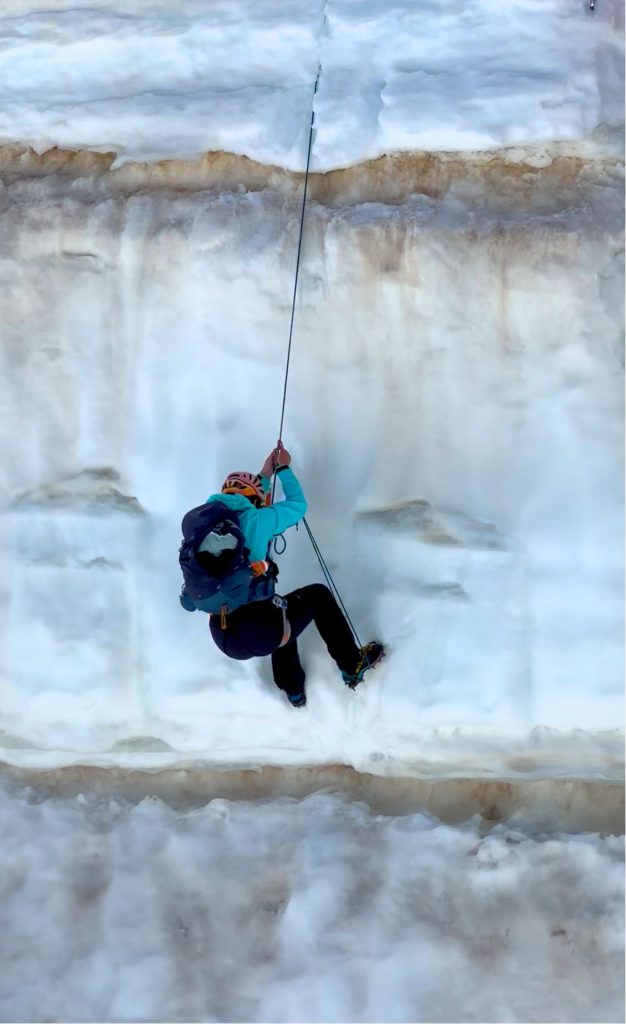
When a partner falls into a crevasse, knowing the manoeuvres isn’t enough: you need to assess the situation, organise the rescue and manage the load safely.
Two days of hands-on exercises devoted to building anchors in snow and ice, arresting a rope-team member’s fall and practising advanced crevasse rescue techniques.
A LAB to test your skills, deal with more complex situations and gain greater command of self-rescue manoeuvres.
Who it’s for
For mountaineers, ski tourers and anyone who spends time on glaciers, who already know the basic techniques and want to go deeper into handling emergencies on a glacier.
A LAB designed for those who want to go beyond the fundamental manoeuvres, tackle more complex rescue situations and gain more confidence in their practical skills.
What you’ll build
During the LAB you’ll learn to:
- Assess the terrain and choose the anchor system best suited to the situation.
- Build belays and anchors in snow and ice, using ice screws, ice bollards and deadman anchors.
- Arrest a rope-team member’s fall and transfer the load safely to an anchor.
- Carry out the manoeuvres to escape the system.
- Build and use crevasse rescue systems, from basic pulley systems to complex, high mechanical advantage ones.
- Ascend a fixed rope on your own using mechanical ascenders and friction hitches.
- Deal with simulated emergency scenarios, choosing and adapting the manoeuvres to different situations.
Prerequisites
You need previous experience of glacier travel, with knowledge of the main knots and of how to rope up as a rope team.
You must be familiar with the fundamental crevasse self-rescue manoeuvres, have good physical fitness and be accustomed to moving on glaciers at altitude.
How it works
The LAB is made up of two days of exercises on snow and ice, devoted to dealing with a fall into a crevasse and the manoeuvres for rescuing your partner.
- Day one
After meeting and checking equipment, you work directly on the terrain, trying out different ways to build belays and anchors in snow and ice.
The exercises continue with holding the fall, transferring the load to the anchor and escaping the system. You then tackle the first hauling systems, to consolidate the fundamental techniques before moving on to more complex situations.
- Day two
Day two is devoted to high mechanical advantage hauling systems, with exercises on varied terrain and in situations that require you to adapt the manoeuvres.
You try out different techniques for ascending a rope on your own, using mechanical ascenders and friction hitches.
The LAB ends with emergency simulations in which participants have to assess the situation and choose the most appropriate manoeuvres, followed by a final debrief with the Guide.
Practical information
Personal equipment
Crampon-compatible mountaineering boots, crampons with anti-balling plates, classic ice axe, helmet, harness, 30–35 litre mountaineering rucksack, technical clothing suitable for high altitude, waterproof and windproof shell, gloves plus a spare pair, sunglasses suitable for glaciers, sun cream, head torch and personal items for the night in the hut.
The final kit list will be sent to you before the activity.
The price includes
- Instruction and guiding by the Mountain Guide on both days.
- The Mountain Guide’s professional liability insurance.
- Rescue insurance for participants, subject to the policy terms.
- Use of the ropes and shared technical equipment needed for the exercises, including HMS karabiners, accessory cords, slings, belay and abseil devices, mechanical ascenders, pulleys and gear for building anchors and crevasse rescue systems.
The price does not include
- Personal equipment and any hire costs.
- Participants’ travel, night in the hut, meals and lifts.
- Travel, hut accommodation, meals and lift costs for the Mountain Guide and any assistants, shared among participants.
Organisation and logistics
The LAB runs over two consecutive days, with one night in a high-altitude mountain hut.
The location will be chosen according to snow and glacier conditions, favouring terrain suited to hands-on crevasse rescue exercises.
The meeting place and time, directions to the hut and organisational details will be sent to you before the activity.
Deposit, cancellations, weather and insurance: read Terms and information.
More high mountains activities
Heart of the glacier
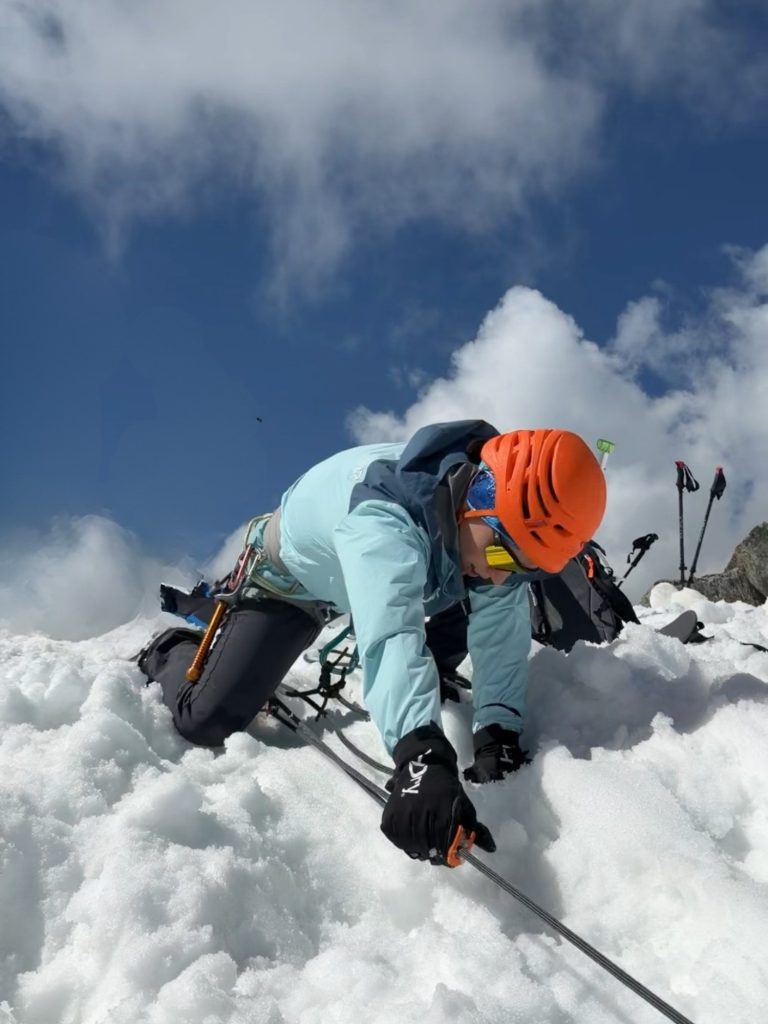
Basic course in glacier travel and safety
A course that starts from the foundations: moving with crampons and ice axe, roping up and managing the rope team, reading glacial terrain and your first manoeuvres for holding a fall and crevasse rescue.
Scheduled11–13 June 2027
Beginner-friendly
per person€290
Capanna Margherita
Monte Rosa, 4,554 m
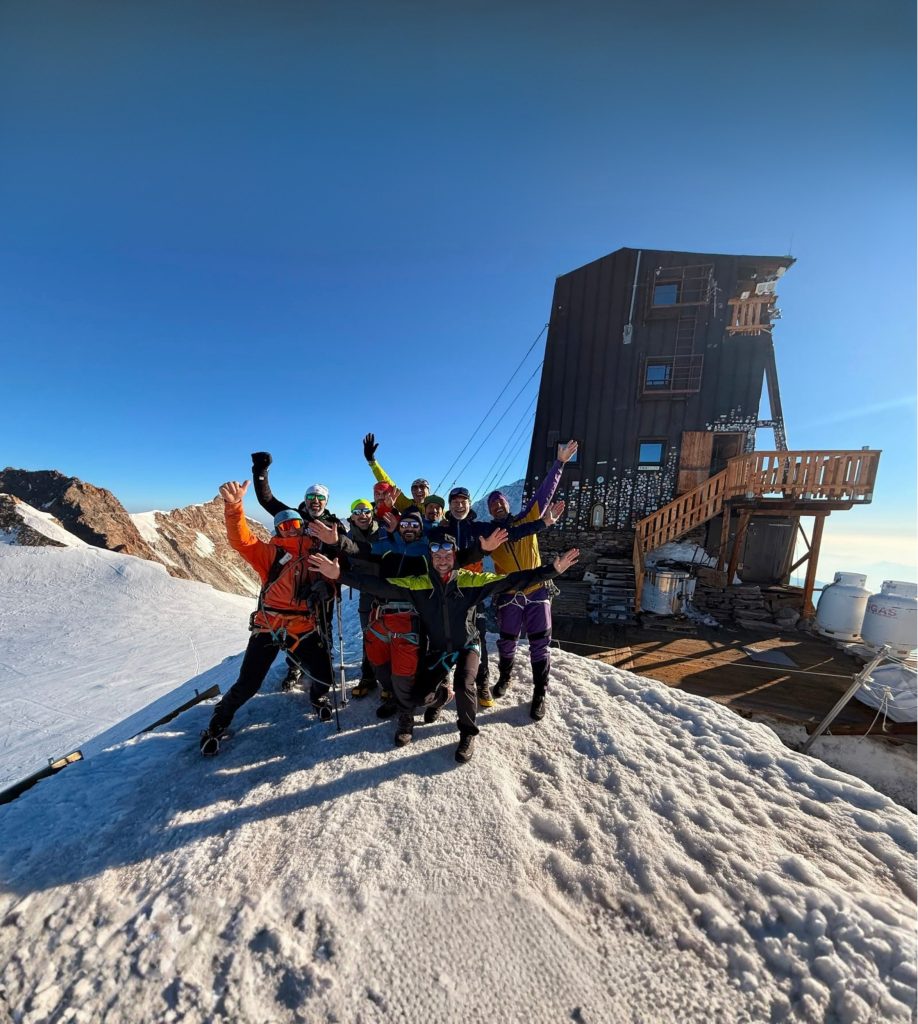
Three days at altitude to reach the highest mountain hut in Europe, on Punta Gnifetti in the Monte Rosa massif: the crevasses of the Lys Glacier, the Piramide Vincent, acclimatisation step by step.
Scheduled28–30 July 2027and one more date
Beginner-friendly
per person€350
Mont Blanc Stage
Italian Normal Route – 4,810 m
Four days of acclimatisation, preparation and mountaineering in the Mont Blanc massif, with a summit attempt via the Italian Normal Route, conditions permitting.
Scheduled28 June – 1 July 2027
Experience required
private option€2,100