
The art of the ridge
Ridge course, advanced
On major alpine ridges, climbing ability is only part of the challenge. You need to read the terrain, choose how to protect your progress, manage your time and make decisions along complex routes, where even the descent demands attention and skill.
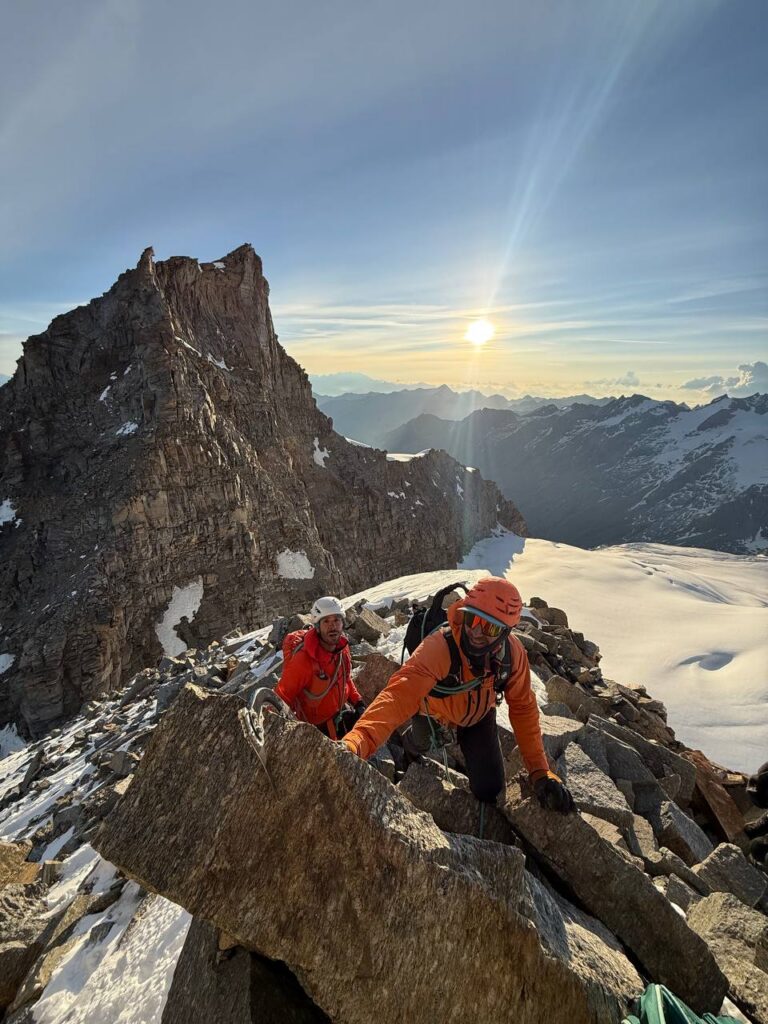
THE ART OF THE RIDGE is a three-day advanced course focused on alpine ridges up to grade IV–V, designed to develop the technical skills and judgement needed to tackle more demanding mountaineering routes.
The course combines technical practice with climbing and traversing alpine ridges, giving participants an active role in managing the rope team under the supervision of the Mountain Guide.
Who it’s for
For mountaineers and climbers with experience on rock who want to progress towards longer, more complex alpine ridges and take a more active role in managing the rope team.
For those who want to move beyond simply following a guide, developing greater confidence in assessing the terrain, choosing the right techniques and making decisions during an alpine climb.
What you’ll build
During the course you’ll learn to:
- Apply short-roping techniques and moving together with running belays, choosing the appropriate method for the terrain.
- Choose when to move together and when to belay pitch by pitch, depending on the terrain.
- Use trad protection and natural anchors to make your progress more efficient and safer.
- Plan the route, assessing timings, difficulties and retreat options.
- Carry out rope-team self-rescue techniques, such as releasing a loaded belay, hauling the second and ascending the rope.
- Manage a series of abseils and descents on exposed terrain.
Prerequisites
Solid rock climbing experience is required, with confident, well-established technique at grade IV–V and previous experience on alpine mountaineering routes.
Participants must be familiar with the main belaying and rope-team management techniques, including placing protection on rock.
Good physical fitness, endurance for long days in the mountains and confidence moving on exposed terrain at altitude are essential.
How it works
The course runs over three days in the mountains, alternating technical exercises with climbing ridges of a difficulty suited to the group.
- Day one
Day one begins with the approach to the mountain hut or bivouac that will serve as the base for the course, followed by technical training focused on rope-team progression and safety.
You go into moving together with running belays in more depth, along with the use of self-locking devices and techniques for making the rope team move more efficiently. The exercises also include self-rescue techniques, such as releasing a loaded belay, hauling the second and ascending the rope.
You also look at route planning and managing timings on the climb.
- Day two
Day two is dedicated to climbing and traversing a classic ridge of up to grade IV–V.
Participants take an active role in leading the rope team, switching between moving together with running belays and pitch-by-pitch belaying depending on the terrain. Particular attention is paid to choosing protection, managing time and descent techniques, including any series of abseils.
- Day three
Depending on the chosen route and the conditions, day three is dedicated to completing the traverse or to a second technical route on a ridge or mixed terrain.
Participants consolidate the techniques covered on the previous days, always under the supervision of the Mountain Guide.
The day ends with the descent to the valley and a debrief on the experience.
The programme may be adapted to the weather, the nature of the terrain and the group’s level.
Practical information
Personal equipment
Helmet, harness, climbing shoes, approach shoes suited to alpine terrain, lanyard, accessory cords, screwgate karabiners and a suitable belay/abseil device.
Layered technical clothing, waterproof and windproof shell, gloves, hat, sunglasses, head torch, 30–35 litre rucksack and water bottle.
Personal items needed for overnight stays in a mountain hut or bivouac, according to the instructions provided before departure.
A final equipment list will be sent once the route and accommodation arrangements have been confirmed.
The price includes
- Instruction and guiding by the Mountain Guide on all three days.
- The Mountain Guide’s professional liability insurance.
- Rescue insurance for participants, subject to the policy terms.
- Use of the ropes, protection and shared technical equipment needed for the exercises and the climbing, provided by the Mountain Guide.
The price does not include
- Personal equipment and any hire costs.
- Participants’ travel, overnight stays, meals and any lifts.
- Travel, accommodation, meals and lift costs for the Mountain Guide and any assistants, shared among the participants.
Organisation and logistics
The course runs over three consecutive days, with nights in a mountain hut or bivouac, depending on the chosen route.
The Mountain Guide will choose the ridge taking into account the weather, the nature of the terrain and participants’ experience.
The meeting place and time, information on accommodation and directions for organising transfers will be sent to you before the activity.
Deposit, cancellations, weather and insurance: read Terms and information.
More mountaineering activities
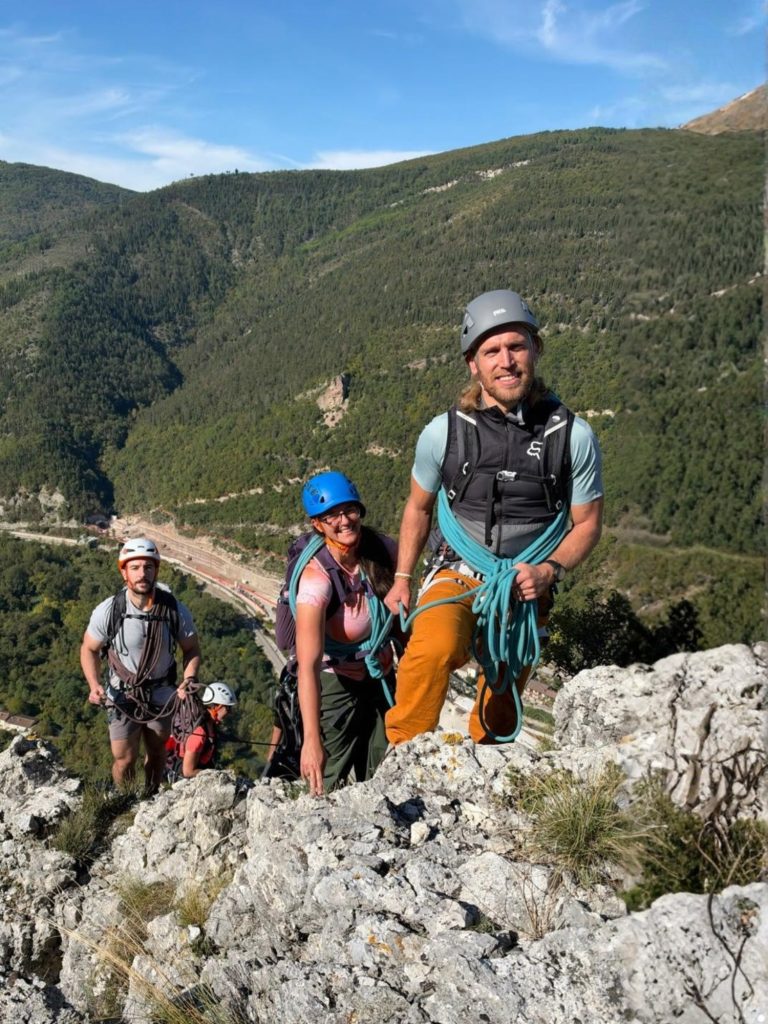
Roped together
Introduction to short-roping
A one-day introduction to short-roping on easy mountaineering terrain. Learn to manage the rope, adjust spacing between partners and use natural features for protection.
Beginner-friendly
per person€80
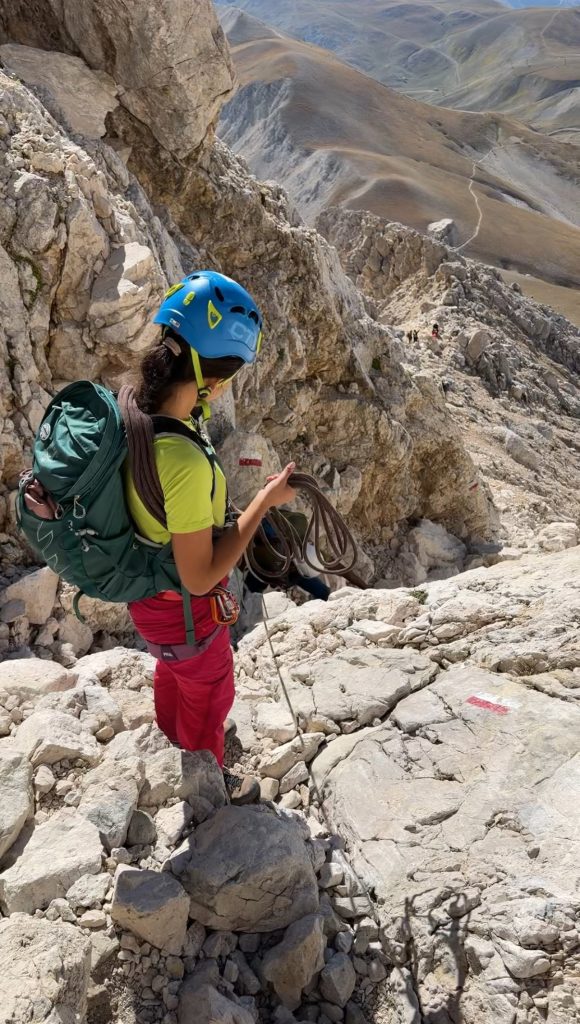
Follow the skyline
Basic mountaineering course
Two days to learn the fundamentals of moving on rock, handling the rope and using protection and belaying techniques, with practical exercises and an easy alpine route.
Scheduled17–18 April 2027
Beginner-friendly
per person€180
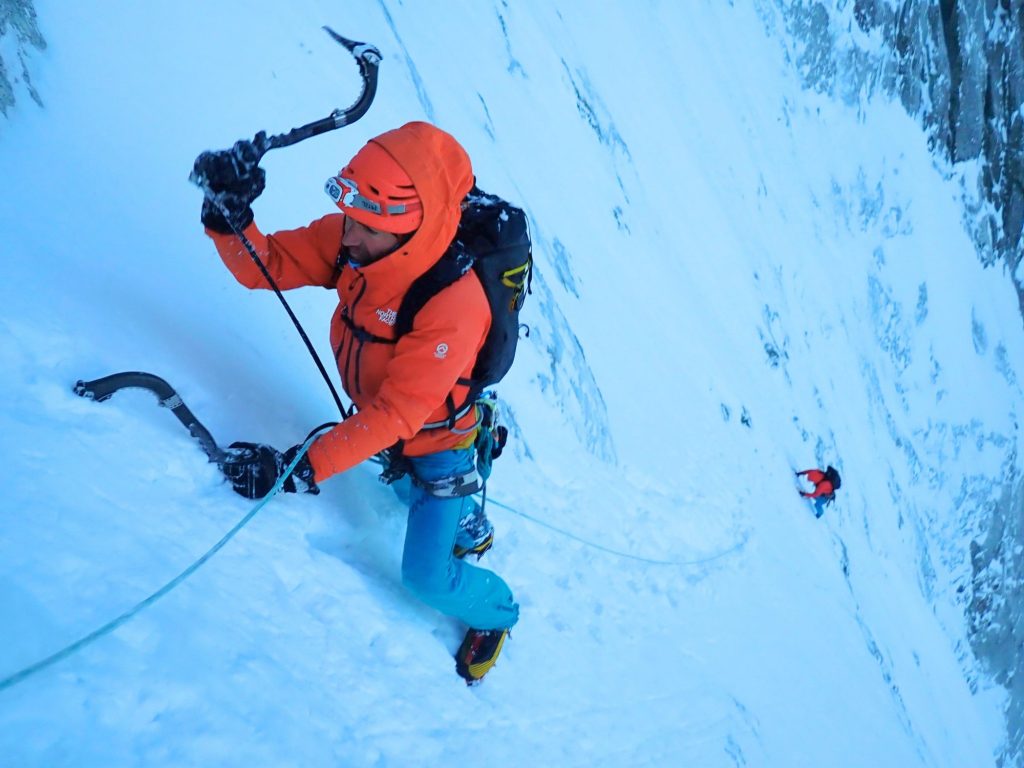
The rules of winter
Winter mountaineering course
Movement techniques and safety management in the mountains in winter, on snow, ice, couloirs and mixed terrain, choosing the right technique for the conditions.
Scheduled23–24 January 2027
Beginner-friendly
per person€180